
Man vs Money: Should the Australian Grand Prix still be held at Albert Park?

Albert Park is popular with strollers, runners, cyclists, fishermen and sailors all year round. But as the calendar year ticks over, the focus turns to the uproar of the world's fastest cars racing at speeds of 300km/h + around the lake in one of the largest international events of the year.
The popular South Melbourne Lake has been the home of the Australian Grand Prix since 1996, after taking over from Adelaide and has hosted the event since 1985.

The circuit is built using a mixture of existing roads, as well as a small detour through the car park of the Lakeside Stadium to form a 5.3km clockwise circuit, at a race distance of 307km in a span of 58 laps on the Sunday afternoon of the race weekend. The lap record is held by Michael Schumacher, storming his 2004 championship-winning Ferrari to a lap time of 1:24.125.
The deal to host the Melbourne Grand Prix was done in 1993, with the organisers inking a new contract in 2015 to keep the Grand Prix on the calendar until at least 2023, before extending the contract to 2025 in 2019.
An average attendance of 300,000 people is expected over the four days, with over 100,000 people expected on Sunday. These numbers make the event one of the most attended races on the Formula 1 calendar worldwide.
But while there is no trouble attracting fans, we haven’t quite had a home race hero. The best finish for an Australian at Albert Park is fourth place, achieved by Daniel Ricciardo in 2014, 2016 and 2018, as well as Mark Webber in 2012.
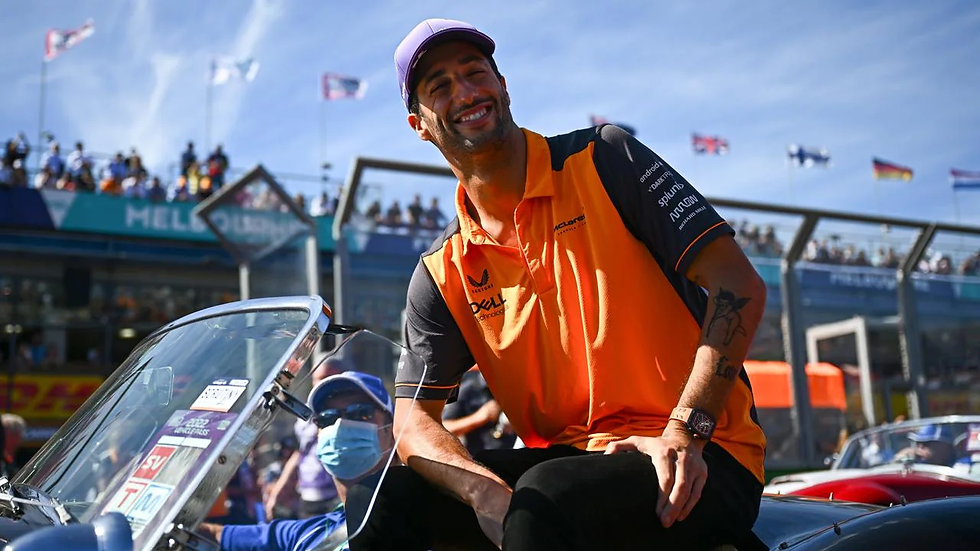
Since the inaugural event in 1996, the Victorian government has done an amazing job in organising the race weekend, creating a positive atmosphere for a wide range of Victorian cultures as well as providing a great welcome for the travelling fans.
“There is nothing quite like the Australian Grand Prix in Melbourne and the buzz it creates around our state,” Victorian Premier, Daniel Andrews states.
“It attracts visitors to Victoria from all over the globe and shows the world we have the best of everything.”
Formula 1 commentator, David Croft explained that it is a ‘reward’ to be gifted the Formula 1 Grand Prix. And when you look at the statistics around the event, it is hard to disagree.
A government official estimates that the event has a $40 million economic impact every year, with people flying in from all over the world to witness the international event.
Not only are people flying domestically, more than 10,000 people from many countries around the world will also make the trip to Melbourne, putting the tourism industry in the spotlight.
The circuit is only a few stops on the train away from the world-famous Melbourne Cricket Ground (MCG), as well as the Melbourne Aquarium and the Eureka Skydeck being within the CBD.

There are also many experiences available within a couple of hours away. The Yarra Valley, Werribee Zoo and the Great Ocean Road are very popular tourist destinations. Tourists visiting these destinations help with Victoria’s mission to further promote regional areas in Victoria.
These experiences are often promoted on external websites that tourists will use to plan their trip to Melbourne, but the official Formula 1 experiences website will also provide these details, a more likely source of information that will reach a greater amount of people.
The ‘Visit Melbourne’ website has seen an increase in website views since the beginning of 2022 in comparison to previous years, with increases from Singapore alone being up 72%, New Zealand 33% and the United Kingdom up 20%.
These destinations greatly benefit from the Grand Prix in Melbourne every year as many tourists visit each destination respectively. But the big winners in the travel and tourism industry are the hotels and accommodation, as well as restaurants.
It is virtually impossible to book a hotel within the CBD during Grand Prix weekend due to the high demand for accommodation for tourists.
As of February 2022, over 66% of all available bookings in Melbourne for the weekend of the Grand Prix were already booked out, and Qantas Hotels had already seen a 56% spike by January, of which has now been completely booked out for months.
The benefits of the high demand of tourists work hand-in-hand with restaurant owners as well, as most tourists will be in search of places to eat on multiple occasions throughout the day.
Other parties who will benefit include taxi drivers, cafes, small business owners, public transport and homeowners who look to rent out their houses through websites like Airbnb.
According to a survey conducted by The Age, Victoria tops as a destination for shopping, food and wine, festivals and overall experiences. Giving tourists plenty of excuses to check out all the local businesses, who will certainly profit greatly from the event.
The event also increases the chances of tourists who make the trip to Melbourne to spread the word, creating exposure for the city worldwide and an intent to revisit in the future, potentially bringing more people along with them.
A marketing study showed that word of mouth is increasingly becoming a more trusted source of information in the industry, as people usually turn to online sources when deciding if they want to travel to places. Tourists are now more influenced by what trusted personnel are directly recommending.
The race also provides significant ‘invisible’ benefits to the city of Melbourne over the four-day race weekend, being broadcast to hundreds of millions of people across 187 countries worldwide.
This means that Victoria is being further exposed to important trading partners in China, India and Japan. As well as a great amount of sponsorship exposure for Australian businesses partnered with the Grand Prix.

Here are some projected live global audience sizes for major sporting events around the world by Futures Sport + Entertainment, in comparison to the estimated combined audience size of the Australian Grand Prix:
· FIFA World Cup Final: 350 million
· Australian Grand Prix: 270 million (Combined)
· UEFA Champions League Final: 170 million
· Winter Olympics Opening Ceremony: 140 million
· Superbowl: 125 million
· Winter Olympics Closing Ceremony: 80 million
Overall, the worldwide audience exposure measured by Comperio research across 82 countries resulted in an average of a $40 million gain through media and advertising per year.
It is reasonable to assume that this number dramatically increases from studies conducted in 2014. Due to the rise of social and digital media, there are new ways to watch the grand prix, but while these platforms may not economically impact the event, it provides an even greater amount of exposure.
The race provides loads of working opportunities for the Victorian population, as well as travellers. The construction, transport, advertising, entertainment and security industries are all being provided with extra work during the set-up, race weekend and pack-up of the track.
It also creates hundreds of part-time jobs for public servants across the race weekend, as well as 300+ full-time equivalent jobs according to the Department of Business and Innovation.
So why are there so many protests to move the grand prix from Albert Park?
In December 1993, Melbourne residents did not feel like they had benefited from the announcement that Albert Park would be transformed into a racetrack. A group called “Save Albert Park” (SAP) was formed in 1994, where concerned residents had come together to protest the race.
It is estimated that over 20,000 people showed up to Melbourne’s City Square and even attracted protesters to form outside of then Formula 1 chief Bernie Ecclestone’s office in London.

SAP’s objective is very clear, to stop motor racing in Albert Park.
Protesters aim to reclaim and restore Albert Park as a public open space and parkland all year round, working to protect the park from the impact of the grand prix and other inappropriate development and activities that occur in conjunction with it.
Common issues include noise, traffic congestion, pollution and loss of public space.
This comes off the back of many environmental issues, including an additional 50,000 sq. metre of asphalt that meant the destruction of over 1000 trees, including a wide range of native gums.
An academic study by the marketing and events committee calculated that 112,669 litres of petrol, 2,786 litres of LPG and 279,597 litres of diesel were used during the grand prix weekend of 2007, equating to 1,011 tonnes of carbon dioxide being released into the atmosphere in Albert Park.
GreenFleet, a not-for-profit organisation and a partner of the Australian Grand Prix Corporation was established to plant more than 3,700 trees in an attempt to reduce the amount of CO2 over grand prix weekends, but this will only minorly affect the overall impact.
The best part of $58 million worth of taxpayer money is put into the development of the Albert Park circuit, acting as the heart of the debate about whether or not the grand prix should continue in Melbourne.
SAP estimated a net economic loss to Victoria of up to $66.55 million. This includes not just financial losses but also non-market values like noise and the loss of Albert Park being used as a public space.
Although government records and annual reports show that the Grand Prix estimates an overall profit economically, as well as stating that the exposure and creation of opportunities are well worth the money, SAP spokesperson Peter Logan continuously accuses the Victorian Government of fraud.
They’re spending a lot of our money and if they are not telling us the truth in justifying it, well, it’s something that certainly keeps us going and we’ll keep doing our research on it”, Logan said.
Logan and SAP fought to have the corporate methodology made public but were unsuccessful in their attempt. Highlighting that the false economic figures don’t justify the environmental effects of the race.
“It’s sacrificing a park for a commercial event when the commercial event could be held on a motor racing circuit, for example.”
“The net effect is that during the time it’s there, clubs are displaced, kids can’t play in the park, and then when it leaves the grounds are in a mess,” he said.
SAP continues to protest the Grand Prix every year it is held but is rapidly decreasing in numbers.
Although the Australian Grand Prix is now contracted to stay in Melbourne until at least 2025, critics will always continue to question the necessity for a Grand Prix to be held at Albert Park. But while the past cannot be changed, Formula 1 acknowledge that change needs to be had in racing worldwide, by announcing a plan for carbon-neutral fuel by 2025, and to be net-zero carbon by 2030.
The change is unlikely to completely change the minds of SAP and other critics of the Grand Prix, but it is clear that the message is being received by Formula 1.


Comments